Using Civic Imagination to Shape Our Next 250 Years
2026 marks the 250th anniversary of U.S. democracy, and how we participate now will shape what the next 250 years look like.
A 2025 Pew Research Center poll found that 76% of Americans believe our political system needs significant change, but only a quarter are confident it can change. After 250 years, are new and better ways of doing democracy still possible?
We believe they are—when communities come together to imagine, practice, and build democratic futures.
Civic imagination—the practice of envisioning a better future and mapping steps to get there—is a critical tool for meeting this moment. Artists, storytellers, community leaders, and activists are using art and culture to expand what feels possible and strengthen movements for justice and belonging.
Everyday Democracy invites communities nationwide to host inclusive OurNext250 gatherings that build connection, spark shared vision, and help people practice democracy together.
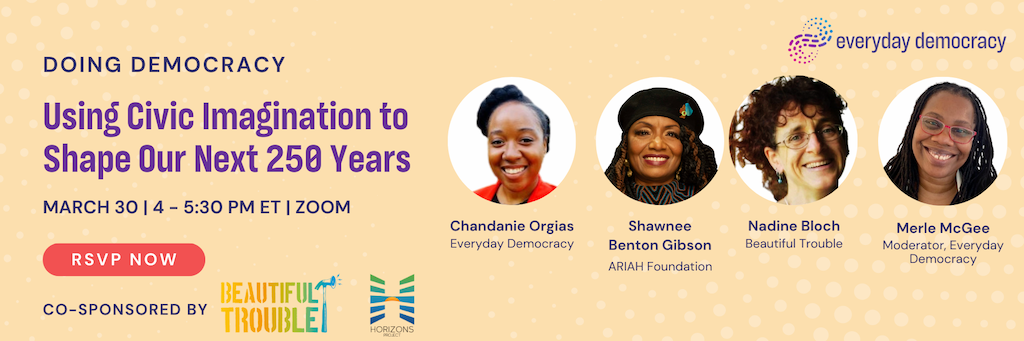
Join us for Doing Democracy: Using Civic Imagination to Shape Our Next 250 Years—a virtual conversation with three leaders building a fair, inclusive future for our democracy. You'll gain inspiration for local civic action, practical steps to practice democracy in everyday life, and a community of creators and organizers.
Together, we'll explore:
- How creativity fuels movements for democratic change
- How art and community ritual open new pathways for civic participation
- How to use Everyday Democracy's OurNext250 gathering guide and get involved
This event is co-sponsored by Beautiful Trouble and The Horizons Project.
About the Panelists
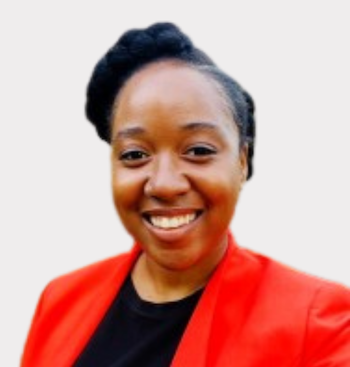
Chandanie Orgias is National Director of Narrative and Culture at Everyday Democracy, where she brings a passion for using storytelling and cultural organizing to inspire collective action in local communities. She is a dynamic leader with over 14 years of experience driving people-centered initiatives across education, arts, and community engagement. Her work spans coaching school leaders across New York City, amplifying youth voices in arts and activism at the Metropolitan Museum of Art, and guiding organizations through racial equity initiatives. Chandanie is a member of the Horizons Project's Arts/Culture/Democracy working group.
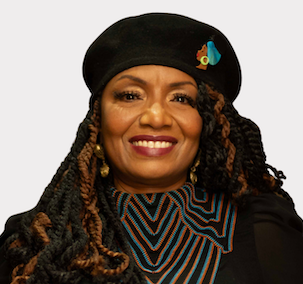
Shawnee Benton Gibson, LMSW, FDLC, is an artivist, psychotherapist, director, and cultural strategist who uses the arts as a catalyst for healing, dialogue, and social transformation. She is the founder of Spirit of a Woman Leadership Development Institute and co-founder of the ARIAH Foundation (Advancement of Reproductive Innovation through Artistry and Healing). Through psychodrama, storytelling, ritual, and immersive public experiences, Shawnee creates spaces where communities confront injustice and imagine liberated futures. She is a central voice in the Peabody and duPont Award-winning documentary Aftershock, which follows her family's fight for maternal health justice. Her work bridges art, advocacy, and civic engagement to inspire collective action and cultural change.
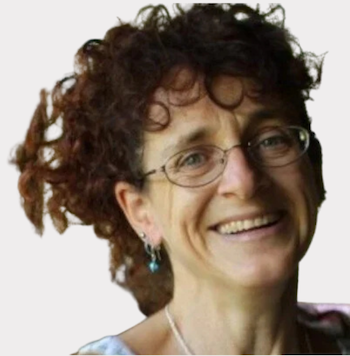
Nadine Bloch is an outside-the-box activist artist, political community organizer, strategic nonviolent actionist a and the Training Director for Beautiful Trouble. Her work explores the potent intersection of art and politics, where creative cultural resistance is not only effective political action, but also a powerful way to reclaim agency over our own lives, fight oppressive systems, and invest in our communities — all while having more fun than the other side! In addition to contributing content to Beautiful Trouble, Beautiful Rising, and We Are Many: Reflections on Movement Strategy from Occupation to Liberation (2012, AK Press), she is the author of Education & Training in Nonviolent Resistance (2016, USIP) and the co-author of SNAP: An Action Guide to Synergizing Nonviolent Action and Peacebuilding (2019, USIP.) Find more of her writing on arts & activism at WagingNonviolence.org.
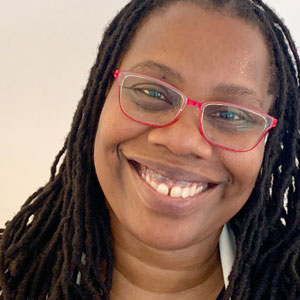
Merle McGee (Moderator) is the President and Chief Executive Officer of Everyday Democracy. Merle brings over 25 years’ experience in non-profit settings fighting alongside historically marginalized and excluded communities for dignity and racial, gender, and economic justice. Before joining Everyday Democracy, Merle served as Chief Equity and Engagement Officer at Planned Parenthood of Greater New York, where she led organizational transformation through community engagement initiatives. She is also co-facilitator and leader with the Anti-Racist Alliance and the co-founder of the The BIPOC Project, an antiracist collective committed to building solidarity among people of color.